
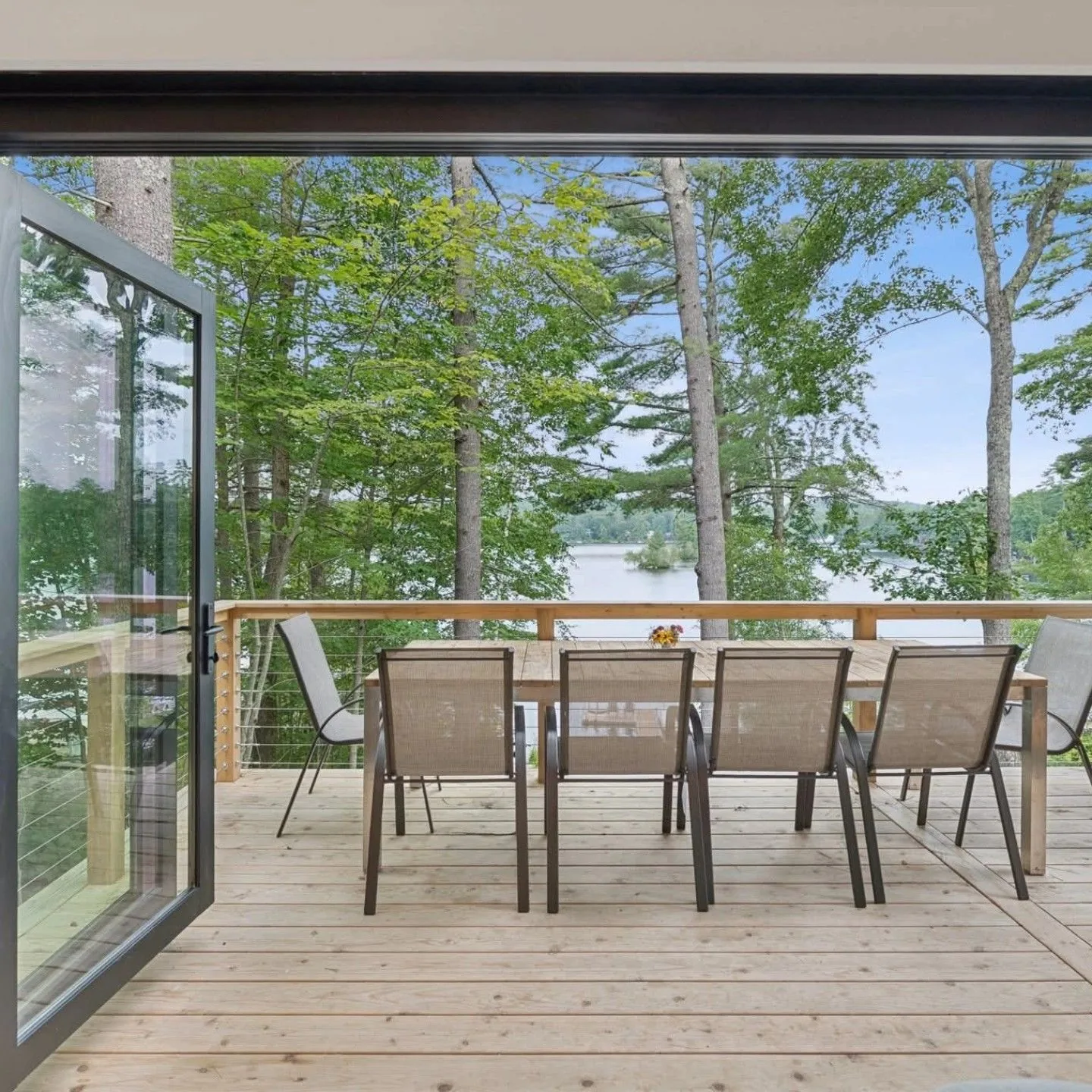
Why Material Choice Matters Here
Maine is not a forgiving environment for outdoor structures. Your deck endures freeze-thaw cycles from late fall through early spring, heavy snow loads, intense summer UV exposure, and in coastal or lakefront locations, persistent moisture and salt air. The material you choose determines not just how your deck looks on day one, but how it holds up five, ten, and twenty years down the road.
Every material involves trade-offs between cost, maintenance, appearance, and longevity. There is no single best option for every homeowner. The right choice depends on your budget, how much maintenance you are willing to commit to, and the specific conditions your property faces.
Pressure-Treated Lumber
Pressure-treated pine is the most common and least expensive decking material. It is widely available at lumberyards throughout Southern Maine and every carpenter is familiar with working it. The chemical treatment protects against rot and insect damage, making it a reasonable choice for ground-level decks and utility structures.
The drawbacks are real, though. Pressure-treated lumber requires staining or sealing every one to two years to maintain its appearance and protect against moisture absorption. In Maine's climate, boards that are not properly maintained will check, split, and gray out quickly. The wood also tends to warp and twist as it dries after installation, especially if it was not kiln-dried after treatment.
Expect to pay roughly $2 to $4 per linear foot for the boards themselves. It is the lowest upfront cost, but the ongoing maintenance adds up over the life of the deck. For a family on a tight budget who does not mind annual upkeep, pressure-treated lumber gets the job done.
Cedar
Western red cedar has natural resistance to rot and insects without chemical treatment, and it starts with a beautiful warm tone that many homeowners love. It is lighter and easier to work with than treated lumber, and it does not have the same tendency to warp during the drying process.
The challenge with cedar in Maine is that it is a softer wood. It dents and scratches more easily than other options, which matters on a high-traffic deck. It also requires regular maintenance. Without staining or sealing, cedar will weather to a silver-gray within a year or two. Some homeowners prefer that natural patina, but if you want to maintain the original color, plan on staining every one to two years.
Cedar decking typically runs $4 to $7 per linear foot. It costs more than pressure-treated lumber but offers a more refined look and avoids the chemicals. For lakeside camps and cottages where the aesthetic matters, cedar is a popular choice in our area.
Composite Decking
Composite decking, with brands like Trex and TimberTech being the most common, is made from a blend of wood fibers and plastic polymers. The major selling point is low maintenance. You will never need to stain or seal a composite deck. Periodic cleaning with soap and water or a pressure washer on a gentle setting is all that is required.
Modern composites have come a long way from the early generations that faded badly and showed staining. Current capped composite products have a protective polymer shell that resists fading, staining, and mold growth much more effectively. They handle Maine's freeze-thaw cycles well because they do not absorb water the way wood does.
The downsides are cost and feel. Composite decking runs $6 to $12 per linear foot depending on the product line. It also does not feel like real wood underfoot, and it can get noticeably hot in direct summer sun. Some homeowners find the appearance convincing while others feel it looks synthetic. If you are considering composite, visit a showroom and see full-size samples in person before committing.
For lakefront and coastal properties in Southern Maine, composite is often the most practical long-term choice. The reduced maintenance burden is especially valuable for seasonal homes where owners are not around to perform regular upkeep.
PVC Decking
PVC decking is made entirely from synthetic material with no wood fiber content. This makes it the most moisture-resistant option available. It will not rot, warp, or support mold growth, and it stands up well to salt air on coastal properties.
PVC is lighter than composite and does not retain heat quite as aggressively, though it can still get warm in direct sun. It is also the most expensive mainstream decking option, typically $8 to $14 per linear foot. The appearance tends to be more uniform than composite, which some homeowners see as a positive and others feel looks too manufactured.
PVC makes the most sense for docks, waterfront decks, and areas with constant moisture exposure. If your deck is partially shaded and sits near Sebago Lake or along the coast, PVC offers genuine peace of mind against moisture-related issues.
Ipe and Tropical Hardwoods
Ipe is an extraordinarily dense tropical hardwood that outlasts every other decking material. It resists rot, insects, and UV damage naturally and can last 40 years or more with minimal maintenance. The wood is genuinely beautiful, with rich brown tones and tight grain patterns.
The trade-offs are significant. Ipe is expensive, typically $10 to $16 per linear foot, and it is difficult to work with due to its density. Fastening requires pre-drilling every hole, and cuts wear out saw blades quickly. This increases labor costs beyond the material premium. Ipe is also heavy, which means your substructure needs to be designed accordingly.
For high-end waterfront homes where budget allows and the homeowner wants a deck that will outlast the mortgage, ipe is hard to beat. It is not the right choice for every project, but when it fits, the results are exceptional.
Making Your Decision
Start with your budget and your honest assessment of how much maintenance you will actually perform. A pressure-treated deck that gets stained on schedule will last for years. A pressure-treated deck that gets neglected will deteriorate quickly in Maine's climate.
Consider your property's exposure. Coastal and lakefront homes benefit from materials that handle moisture without constant intervention. Sheltered inland properties have more flexibility. Think about how long you plan to stay in the home. If you are building your forever deck, investing in composite or hardwood pays dividends over time. If you are improving a property you may sell in a few years, pressure-treated lumber with a fresh stain can look great and keep costs reasonable.
A good carpenter will walk through these options with you and help you match the material to your specific situation rather than pushing the most expensive product on the shelf.
Have Questions About Your Project?
We are happy to share our expertise. Reach out any time.