
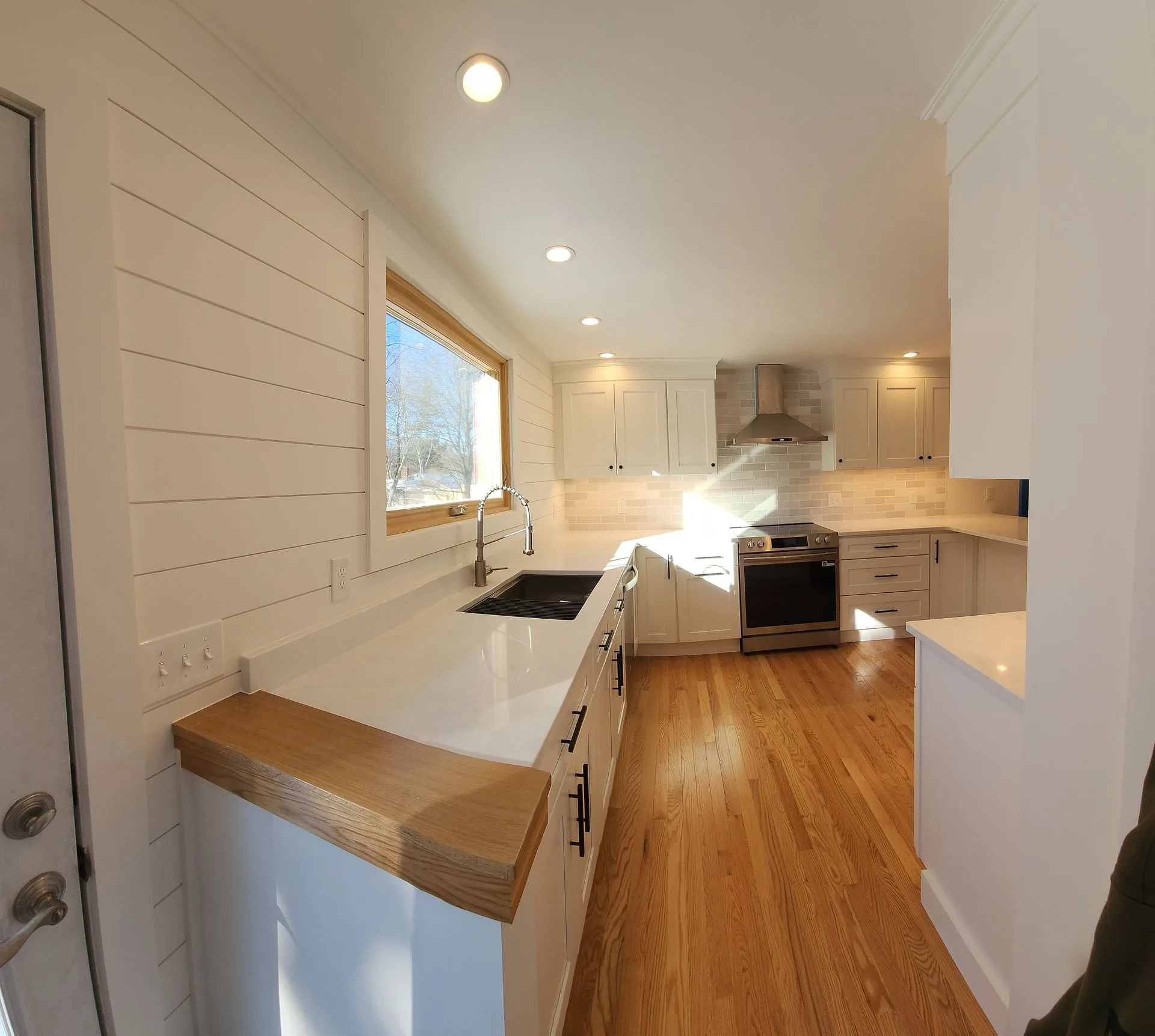
Setting Realistic Expectations
A kitchen renovation is one of the most impactful improvements you can make to your home, but it is also one of the most disruptive. Before you start picking out countertops and cabinet hardware, take time to understand what the process actually looks like from start to finish.
Most full kitchen renovations in Southern Maine take between six and twelve weeks once work begins. That timeline depends on the scope of the project, material lead times, and whether any surprises lurk behind your walls. Older homes in the Casco and Lakes Region area frequently have outdated wiring, inadequate insulation, or plumbing that needs updating once walls are opened up. None of this is unusual, but it is worth building a buffer into your schedule.
A good starting point is to add two to three weeks to whatever estimate you receive. This is not pessimism. It is planning for the reality of renovation work, especially in homes that have seen decades of Maine winters.
Planning Your Layout
The layout of your kitchen determines how well the space functions day to day. The classic work triangle between your sink, stove, and refrigerator remains a solid guideline, but modern kitchens often need to accommodate more than one cook, larger appliances, and island seating.
Before committing to a layout, live with your current kitchen intentionally for a week or two. Pay attention to where you find yourself reaching, where traffic flow gets congested, and which areas feel wasted. Write down every frustration, no matter how small. Those notes become the foundation for a layout that genuinely works for your household.
If your home has a seasonal rhythm, as many lake houses and camps in Southern Maine do, think about how the kitchen needs to perform when the house is full of guests versus when it is just your immediate family. Island configurations with generous counter overhangs can serve double duty as prep space and casual dining.
Budgeting Without Surprises
Kitchen renovations in Southern Maine typically range from $30,000 for a modest refresh to well over $100,000 for a full gut renovation with custom cabinetry and high-end finishes. The single most important budgeting decision you can make is setting aside a contingency fund of 15 to 20 percent on top of your planned spend.
Break your budget into categories: cabinetry and hardware, countertops, appliances, flooring, plumbing fixtures, lighting, labor, and that contingency reserve. Cabinetry usually accounts for the largest share, often 30 to 40 percent of the total project cost. If your budget is tight, semi-custom cabinets can deliver excellent results without the lead time or price tag of fully custom work.
Get detailed, written estimates from your contractor before any demolition begins. A good estimate breaks down materials and labor line by line so you can see exactly where your money is going and make informed trade-offs if needed.
Living Without a Kitchen
This is the part nobody enjoys, but a little preparation makes it manageable. Set up a temporary kitchen station in another room with a microwave, toaster oven, electric kettle, and a small table. A utility sink in a laundry room or basement becomes invaluable for washing dishes.
Stock up on disposable plates and utensils. Plan simple meals and budget for eating out a bit more than usual. If you have young children, establish a routine around the temporary setup early so it feels less chaotic.
For homeowners with seasonal camps on Sebago Lake or nearby, some choose to time their renovation for the months they are at camp. This keeps the disruption at a distance and lets the crew work more efficiently with an empty house.
Questions to Ask Your Contractor
The right questions up front prevent headaches later. Ask your contractor how they handle change orders and what triggers additional costs. Find out who will be on site daily and who your point of contact is for questions. Ask whether they pull permits themselves or expect you to handle that.
Inquire about their approach to protecting the rest of your home during demolition. Dust containment matters, especially in open floor plans. Ask for references from past kitchen projects and follow up on them.
Finally, ask about material lead times. Custom cabinetry can take eight to twelve weeks from order to delivery. Certain countertop materials and specialty fixtures have their own timelines. Your contractor should build these lead times into the project schedule so work does not stall halfway through.
Material Considerations for Maine
Maine's climate puts specific demands on kitchen materials. Homes in the Lakes Region and along the coast experience significant humidity swings between seasons. Solid wood cabinet doors can expand and contract noticeably, so discuss finish options and wood species with your carpenter. Maple and birch tend to be more stable than some softer species.
For countertops, natural stone like granite handles Maine conditions well and is sourced locally throughout New England. Quartz offers similar durability with less maintenance. Butcher block is appealing but requires more care in kitchens with high humidity variation.
Flooring should be chosen with moisture in mind, particularly for homes near water. Tile and luxury vinyl plank both perform well. Hardwood is beautiful but consider engineered hardwood over solid planks in lake houses or coastal properties where moisture fluctuations are more pronounced.
Have Questions About Your Project?
We are happy to share our expertise. Reach out any time.